Biocracked
←

#whole foods

1 article
Approach: macro science (with a conceptual split). Palette: D, bold color field.

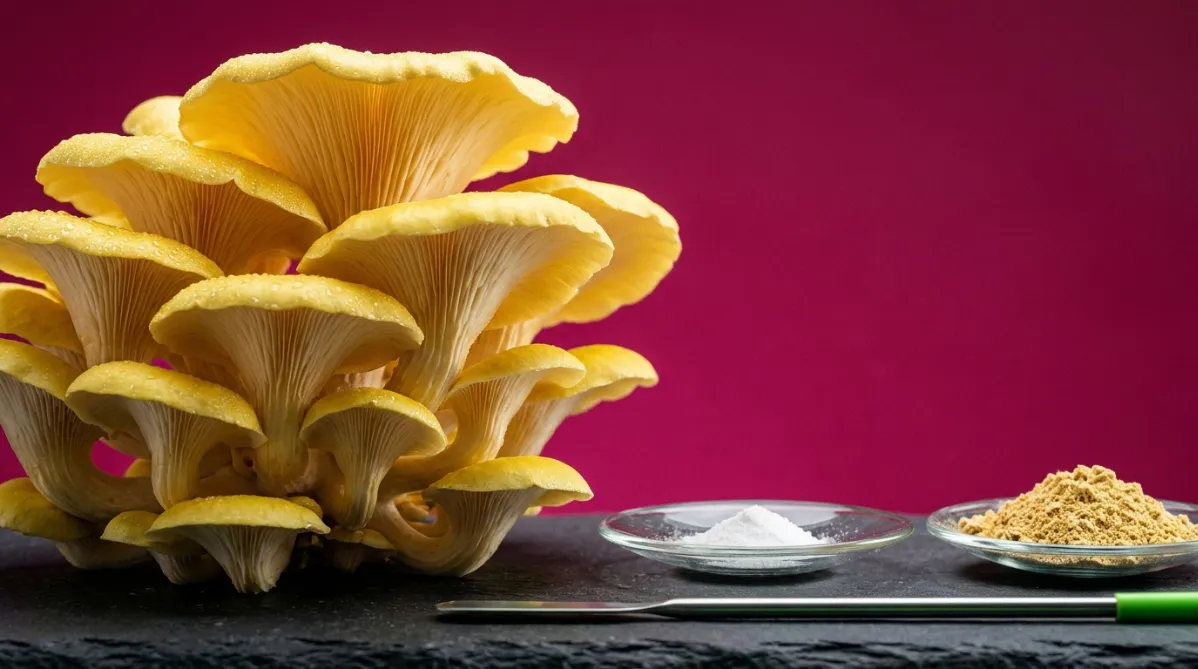
Extreme close-up photograph of a cluster of golden oyster mushrooms (Tamogitake), their ruffled, canary-yellow caps and fine gill structures sharply detailed, shot at a slight low three-quarter angle against a saturated magenta backdrop. In the foreground, a small glass watch dish holds a pinch of fine white crystalline powder, the isolated compound, sitting plain and inert beside a heap of fawn-yellow dried mushroom powder in a second dish. Soft directional studio light from the upper left gives the caps a translucent glow and creates crisp, short shadows. Tiny dew-like droplets cling to the gills. A single thin electric green stem of a lab spatula glints at the edge of the frame. Mood: curious, vivid, quietly skeptical, with the mushroom clearly outshining the isolate. No text or labels.
research

Гриб знизив жир у печінці у гризунів — його головна сполука не спрацювала

BY NOVA CHEN ·

Ерготіонін вважається головним «чудодійним» компонентом грибів, проте нове дослідження на гризунах ускладнює цю картину. Щури та ожирілі миші, які споживали порошок золотого вушного гриба (Tamogitake), мали нижчі рівні холестерину та тригліцеридів у печінці, тоді як миші, які отримували чистий ерготіонін, цього ефекту не продемонстрували. Гриб також, за тенденцією, підвищував виведення холестерину та вільних жирних кислот з калі, чого не спостерігалося при ізоляції. Автори роблять висновок, що ефекти не можна пояснити лише ерготіоніном. Це дослідження проведено лише на гризунах, а гриб складав значні 5 % раціону тварин, тож не замінюйте медичне обстеження печінки смаженою стравою.

This page is available in